
Taking the Pulse of Sanctions on FIs and Other Organizations

By Roy Urrico

Finopotamus aims to highlight white papers, surveys, and reports that provide a glimpse of what is taking place and/or impacting credit unions and other organizations in the financial services industry.
Financial institutions (FIs), and other international organizations, are under intense pressure to navigate complex, rapidly changing global sanctions. Taking the Pulse of Major Sanctions Lists, the latest edition of the Sanctions Pulse, from Atlanta-based LexisNexis Risk Solutions, outlines the scale, pace and trends of sanctions activity in 2025.
Sanctions Pulse — a recurring in-depth evaluation of the global sanctions landscape —uses data from four core regulators: the United Nations (UN), European Union (EU), Office of Foreign Assets Control (OFAC) and United Kingdom (UK) and reflects sanctions activity between January 1, 2025 to December 31, 2025.
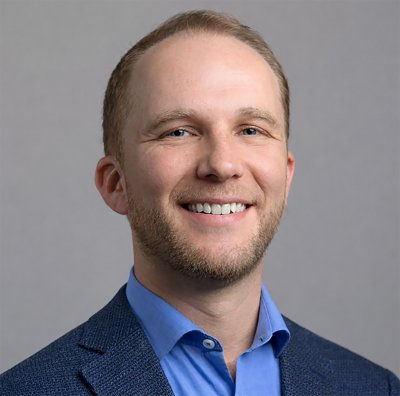
“It's really important to have precise insights and obviously the most accurate and timely data,” said Vincent Gaudel, financial crime compliance expert at LexisNexis Risk Solutions, and author of the Sanctions Pulse series, who discussed report findings with Finopotamus.
“We want to deliver for the market the ability to take a step back and look at the actual dynamics of sanctions. So, every time there is an update by any of the four regulators that we monitor in the report, it requires operational processes and compliance processes, by financial institutions and more broadly, by international corporations,” said Gaudel. The reason is simple, he explained, “Sanctions are very time sensitive.”
The findings can help global organizations, including financial institutions, update sanctions compliance responses in a challenging geopolitical landscape, Gaudel explained. Especially at a moment in history when divergence between the U.S., EU, and UK sanctioning bodies is becoming the norm—not the exception.
Sanctioning Process
The latest LexisNexis Risk Solutions data shows a clear shift toward a more fragmented, multi-polar landscape, where Iran, Russia, cybercrime, and illicit finance are all competing for regulatory attention.
OFAC remains the largest sanctions issuer, yet sanctions activity shows significant acceleration in the EU and UK, adding 46% and 175% more targets respectively year-over-year (YOY). The pace of sanctions change remained high, with 265 list updates and 3,858 net additions across the four lists in 2025. The majority of global sanctions policy in 2025 continued to concentrate on Syria, Iran and Russia, albeit with varying degrees of focus.
Other 2025 LexisNexis Risk Solutions data highlights include:
Sanctions on Russia remained top of mind for the EU and UK. Forty-one percent of EU/UK list updates were related to Russian sanctions. Eighty-eight percent of net additions to the EU list; 66% net additions to the UK list.
OFAC and UN amplified pressure on Iran. 121 individuals and entities were added back into the UN list, the most significant UN action in years. Forty-eight percent of OFAC net additions were under Iran-related sanctions.
Sanctions Structure
“2025 was the year of significant policy shifts. For example, Syria was probably one of the most stringent sanctions programs,” noted Gaudel. “Those measures were in place for more than a decade. It was really close to a full embargo. The reversal of sanctions on Syria was one of the very interesting takeaways from last year. We (also) saw a termination of certain sanctions programs targeting Israeli settlers operating in the West Bank.”
Gaudel also described how the UN, OFAC, EU, and UK, traditionally the four Western sanctions issuers and allies, in the past largely targeted their sanctions in the same direction. “But since last year we are starting to observe pretty radical divergencies in the sanctions’ priority. That is one of the key takeaways from the report last year.”
Gaudel described how Sanctions Pulse covers targeted sanctions “measures imposed on an individual or an entity, or sometimes a vessel that is clearly named in a sanctions list.” He specified other types of measures that aim at specific goods, services, or jurisdictions. “We really focus on targeted sanctions and really count the number of entities and individuals that are subject to those measures. The measures themselves are primarily asset freezes.”
The OFAC SDN list (Specially Designated Nationals and Blocked Persons list) is the most common type of targeted financial sanction, according to Gaudel. But there are other types of restrictions as well that he termed ‘non-blocking’ in nature but having restrictions on certain financial services. These include, for example, shadow fleet vessel sanctions by EU and UK regulators. A shadow fleet involves aging oil tankers and cargo vessels. “They're not blocking measures, but more a ban on port access.”
FIs, Scamdemic and 2026
“Sanctions apply to all professions, all persons, basically, and not only financial institutions, every corporate and even individuals are supposed to comply with sanctions imposed in their jurisdiction,” said Gaudel.
Gaudel mentioned credit unions and their member base as typically more domestic than global. “When we talk about credit unions, I think the exposure to sanctions risk will largely depend on basically their risk profile. The types of services that are offered influence the level of exposure. So, banks providing correspondent banking services have greater exposure than other institutions only operating at a domestic level.”
Another interesting trend, revealed Gaudel, is the use of sanctions in relation to cybercrime. He said, mentioned that LexisNexis observed a growing number of designations in relation to an organized crime group that operates out of southeast Asia, in countries like Myanmar or Cambodia. “They typically target individuals in the U.S. and other western economies for romance scams and the like. This is a massive issue. We call it a ‘scamdemic.’ It has grown into such a scale, it is now described as a foreign policy issue. We see now that issue addressed through sanctions and through asset freezes.”
Gaudel specifically called out developments in October 2025. That is when the U.S. and UK completed a coordinated action targeting the Cambodia-based Prince Group for its role in a transnational criminal organization involved in forced-labor scam compounds, online "pig butchering" (investment) scams, and money laundering. This combined action included extensive sanctions on 146 entities and individuals and resulted in the seizure of over $14-$15 billion in cryptocurrency.
As far as 2026 and beyond, Vincent Gaudel noted a new executive order significantly expanding U.S. sanctioning authorities against Cuba by targeting foreign (non-U.S.) companies and financial institutions. The order authorizes blocking sanctions on entities engaged in key Cuban economic sectors including energy, mining, and finance.
“That latest executive order is another step in the fragmentation of sanctions policies,” said Gaudel. “It's not just theoretical, it's important because global financial institutions, global corporates, have to navigate those changing priorities.”


