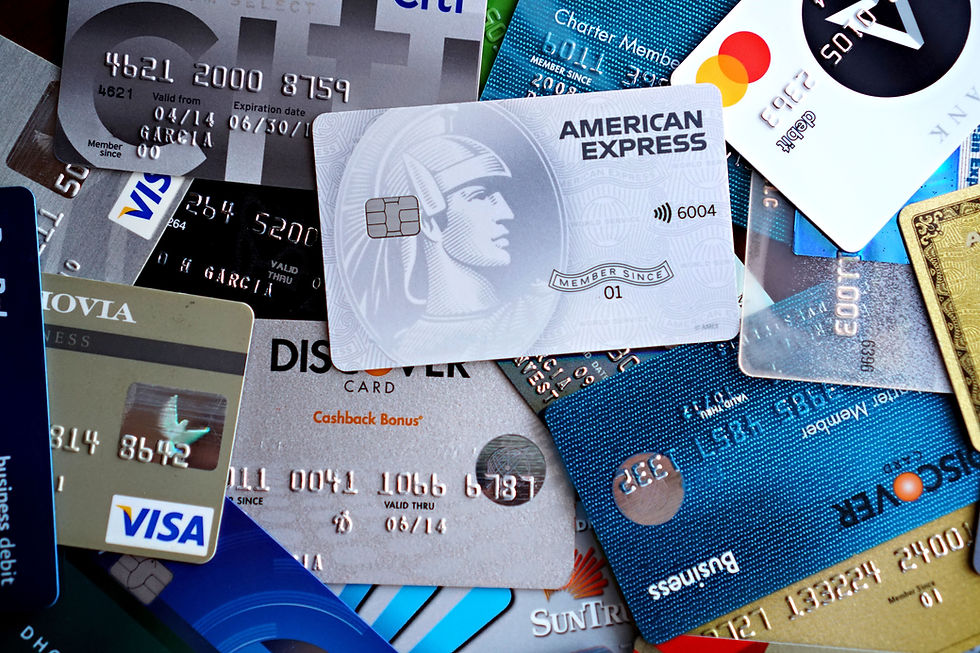
Measuring Household Debt and its Challenges in Early 2026

By Roy Urrico

Finopotamus aims to highlight white papers, surveys, and reports that provide a glimpse of what is taking place and/or impacting credit unions and other organizations in the financial services industry.
Household debt can be a helpful tool for managing major expenses, such as purchasing a home or paying school tuition, but it can also become a significant burden if left unchecked. WalletHub’s recently released Household Debt Survey and Household Debt Report takes a look at the first quarter of 2026 to help better understand the financial challenges households currently face.

“Considering the overall affordability crisis and high gas prices in particular, some people might be surprised to learn that inflation-adjusted household debt actually fell during the first quarter of the year. But it’s important to remember that the war in Iran did not start until the end of the quarter, and some early indicators are pointing to tough times ahead,” said John Kiernan, WalletHub editor.
Kiernan noted 56% of people said recent energy cost increases are leading to debt, according to the survey, and more than 2 in 5 people expect their household debt to increase in the next 12 months. “The best way to prepare for potentially stormy economic conditions is to budget, save, and pay off as much debt as possible now.”
Household Debt Survey
This study reflects the results of a nationally representative online survey of 215 respondents.
Key Findings:
Struggling to stay afloat. More than half of Americans say their household is struggling with debt.
More than financial pain. Forty percent of Americans think their household debt is affecting their health.
Budgeting to the rescue. Sixty-seven percent of people think better budgeting will solve their debt problems.
Fun comes first: Nearly 1 in 5 Americans said they are not willing to sacrifice fun to get out of debt.
Other responses:
“What type of debt is your household struggling with the most?”
Credit card, 58%
Mortgage, 21%
Personal loan, 9%
Student loan, 8%
Auto loan, 5%
Do you feel like credit card companies own you?
No, 53%
Yes, 47%
Are recent energy cost increases giving you debt issues?
Yes 56%
No 44%
Household Debt Report
Alina Comoreanu, WalletHub senior researcher, authored WalletHub’s quarterly Household Debt Report, based the analysis on consumer financial data available from the New York Federal Reserve and the U.S. Bureau of Labor Statistics.
“In this report, WalletHub adjusts the latest data from the New York Fed to account for inflation and give people a better understanding of the current household debt situation as well as how it compares to the past,” said Comoreanu. “Adjusting for inflation is key, as it accurately shows how debt compares to historical levels. In addition, we provide helpful comparisons of debt levels against assets, deposits and other benchmarks.”
Key stats from the first quarter of 2026:
Household Debt
Total household debt: $18.79 trillion.
Average debt per household: $155,607.
Total debt-to-deposits ratio: 25% better than historical average.
Total debt-to-assets ratio: 27% better than historical average household-debt.
Mortgage Debt
Household mortgage debt decreased by roughly $229 billion, in contrast to an increase of roughly $33 billion.
Total mortgage debt decreased to $13.19 trillion.
The average household had $109,216 in mortgage debt.
HELOC Debt
Debt from home equity lines of credit (HELOC) increased by about $4 billion, marking the third consecutive first quarter increase.
Total HELOC debt increased to $446 billion.
The average household had $3,693 in HELOC debt.
Auto Loan Debt
Auto loan debt decreased by $14 billion, marking the sixth consecutive first-quarter decrease.
Total auto loan debt fell to $1.68 trillion.
The average household’s auto loan balance was $13,951 – just $743 below the peak from 2020.
Student Loan Debt
Total student loan debt decreased by $38 billion, marking the fifth consecutive first-quarter decrease.
Total student loan debt fell to $1.66 trillion.
The average household’s student loan debt was $13,728.
Credit Card Debt
Total credit card debt decreased to roughly $1.25 trillion.
The average household’s credit card balance was $10,366.
Total credit card debt currently equals 6.58% of total deposits, which is 0.84% higher than the same period last year. Deposit amounts refer to total deposits held by Federal Reserve Banks.
Other Debt
Debt from other sources – including personal loans and retailer financing offers – decreased to roughly $562 billion.
The average household’s balance was $4,653.