
AI CEO Remains Wary Of ‘Safe’ Mythos Model Despite Revolutionizing Capabilities
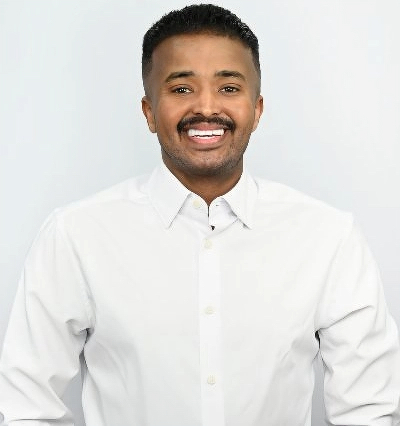
Guest Editorial by Mohamed Yousuf, CEO – Smart Workforce AI

When Anthropic announced on June 9 that it was launching Claude Fable 5, it stated the Mythos-class model was “safe for general use.” But that statement doesn’t sit well with me.
I know enough about artificial intelligence to know that no model is ever completely safe. To say that it is safe ignores the very nature of AI.

An AI model is always evolving. Due to development processes like Reinforcement Learning from Human Feedback (RLHF), the model that exists today could evolve into something new tomorrow. Consequently, the safety tests that are passed today could fail tomorrow.
And RLHF isn’t the only issue that impacts AI safety. Emergent behaviors that crop up as models become more complex can fall outside of developers’ expectations, which means they fall outside of the safety testing that was done. Additionally, AI models are subjected to an infinite variety of interactions from a virtually endless stream of users, which means there are bound to come prompts that challenge safeguards in ways developers never anticipated.
These factors make it clear that safety is not a one-time destination, but a never-ending journey. To be acceptable, statements on safety should refer to ongoing monitoring providing strong external evaluations of AI models and the creation of reliable mechanisms to respond to unexpected behaviors. A release-day announcement saying a model is safe could be invalid by the time the first prompt gets a response.
What Does a Reliable AI Safety Framework Look Like?
Anthropic said it knew there were risks associated with Mythos-class models like Fable 5. To address the risks, it released the model “with safeguards that mean queries on some topics will instead receive a response from our next-most-capable model.”
This approach suggests that a single solution such as monitoring for certain high-risk prompts is sufficient. But if Mythos is as powerful as Anthropic claims, an approach that relies on layers of protection rather than a single solution seems more responsible.
A reliable AI safety framework would include a number of components working in conjunction, including:
Extensive independent testing: Models should be subject to such testing on an ongoing basis before and after release, not just as a one-and-done certification.
Continuous monitoring: It’s important to quickly identify not only risky performance failures but also emerging misuse patterns that indicate potential safety gaps.
Strong identity, access, and rate-limiting controls for high-risk capabilities: When questionable activity is detected, developers should know where it is coming from and who is responsible, and have the ability to shut it down.
Transparency about known limitations and risks: Users should know which kinds of activity pose a risk and, ideally, receive notifications when signs of such activity are detected.
Collaboration with key stakeholders: Governments, researchers, and other AI companies should have a mechanism for sharing safety findings, rather than treating them as competitive secrets.
AI is entering a phase of its development where safety can no longer be entrusted to a single developer. The type of capabilities and risks Mythos brings to the field signal that it’s time for safety to become a responsibility shared across the entire ecosystem.
What Does the Emergence of Mythos Say About the Future Of AI?
The concern that has arisen over Mythos is primarily about information. Could it respond to prompts with information that would reveal vulnerabilities in security systems? Could it explain how that information could be used to topple global financial systems?
But providing information is not the end game for AI. The evolution currently taking place is shifting AI from an information tool to a reasoning and coordination system. Its future value will be found in helping coordinate complex systems like transportation, healthcare, manufacturing, scientific research, and more.
As the shift from information to coordination plays out, the real challenge will be ensuring that autonomous systems remain aligned with human values, transparent in their reasoning, and accountable for the decisions they influence. To meet those challenges, ethical development becomes paramount.
Are AI Developers Prepared to Prioritize Both Power and Control?
Three days after Anthropic announced that Fable 5 was being released, the company issued an update to the announcement, revealing that access to the model had been suspended due to national security concerns raised by the US government. Anthropic suggested the suspension would be short-lived, saying it believed the concerns were based on a “misunderstanding,” and reopened access on July 1.
If Fable 5 had remained suspended, the concerns it triggered would not have gone away. We have no reason to believe models just as powerful — and even more powerful — will eventually become widely accessible. The question at this point isn’t whether they'll be released, but how responsibly they'll be deployed.
Ultimately, AI will reflect the values of the people who are building it. If those people place a priority on human oversight, transparency, accountability, beneficence, and global cooperation, they lay the groundwork for AI models that are both powerful and capable of being governed responsibly.
– Mohamed Yousuf is the CEO and founder of Smart Workforce AI, a workforce intelligence platform focused on transforming how shift-based industries operate in an AI-driven world. His background is rooted in building and scaling technology-driven systems that address structural inefficiencies in workforce planning, scheduling, and labor utilization across sectors, including healthcare, hospitality, retail, and manufacturing. Through Smart Workforce AI, Mohamed focuses on moving organizations away from rigid, approval-heavy scheduling models and toward intelligent, adaptive systems that balance operational needs with greater employee autonomy.


